Showing posts with label Windows 8. Show all posts

Sunday

Android in advance on iPad

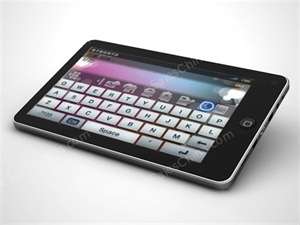
Apple’s iPad may finally be losing market share to Google Android tablets

Sales of tablet computers running Google’s Android software rose more than ten-crease in the last year, as new records suggest that Apple’s iPad may at last be facing serious competition.

Products made by Motorola, Samsung, Acer & others have been greeted with some critical acclaim but have failed to make a serious dent on the dominance of Apple’s iPad. According to analysis by plan Analytics, however, Samsung’s latest generation of Galaxy tablets has led a rise in Android tablet sales & pushed the iPad’s market share last quarter to 67 per cent, down from 96 per cent.

Android-powered tablet computers accounted for 27 percent of global sales during the last quarter, jumping from 2.3 percent a year earlier, plan Analytics said.

Saturday

The Laundry POD


A portable environment friendly washer
Conventional washers use a lot of Power & up to 50 gallons of water with each load. The Laundry POD uses less than 5 gallons of water & ZERO electricity.


This products with innovative materials & function with an emphasis on environmental responsibility. Ideal for small spaces, mobile lifestyles, & displaced living, the Laundry POD is simple to use. Clothes, water & detergent are added to the POD to soak. The user then agitates & rinses the clothes by spinning the crank & draining or adding water as needed. Clothes are spun partially dry in the same manner.

This product is made in 3 different color.
The Laundry POD Price In Stock | $99.95

Source>> http://www.thelaundrypod.com/instructions.html

A New universal charging system for electric vehicles

The worldwide infrastructure of charging stations for electric vehicles[EV] may seem overwhelming, you know what would make it even more challenging? If each station had to separately cater to each make of EV on the road think of how many different styles of mobile phone chargers are currently out there, for instance, & then picture that applying to cars. Fortunately a consortium of automakers has developed the Combined Charging System that will allow any one vehicle to charge its batteries using a variety of different charging methods.

The system was developed by Germany's Audi, BMW, Daimler, Porsche, & Volkswagen, working in partnership with America's Ford & General Motors.

It consists of a single interface on the vehicle, which is compatible with methods such as one-phase AC-charging, fast three-phase AC/DC charging at home & ultra~fast DC charging at public stations. This is intended to make EV development a less complex process, as vehicles won't need to incorporate multiple inlets, nor will their drivers need to seek out specific charging stations. Instead, all electric vehicles will be able to recharge at all stations.

The technology also features a charging communication system, along with an electrical & safety architecture, that will work with any vehicle using the system.

The Combined Charging System is being demonstrated at the 15th International VDI Congress & Exhibition [Electronic Systems for Motor Vehicles], which takes place this Wednesday & Thursday in Baden~Baden. It should be ready for deployment in the auto industry by the middle of next year.

Ultrasound Help For Heal Broken Bones

Scottish doctors are using ultrasound to help speed the recovery of broken bones by stimulating bone regeneration through cell vibration. And the sound frequency & pulse rate of the ultrasound is different than that used on pregnant women, but the technology is the same. The transducer gets a coating of water based gel, & is then slipped into a strap that holds it on the break, stimulating cellular activity.

Doctors found that the ultrasound therapy can lower recovery time by more than one third.

Thursday

Apple founder, Steve Jobs, passed away on Wednesday [October 5]

Apple founder, Steve Jobs, passed away on Wednesday [October 5] at the age of 56, succumbing to pancreatic cancer.

The company announced his death this week. However, did not give any specific cause.

We are deeply saddened to announce that Steve Jobs passed away today, the company said in a brief statement. Steve's brilliance, passion & energy were the source of countless innovations that enrich & improve all of our lives. The world is immeasurably better because of Steve.

Jobs had been diagnosed with a rare form of pancreatic cancer called pancreatic neuroendocrine cancer. While those suffering can live as long as 20 years with the disease, it obviously wasn't the case with the Apple visionary.

His cancer eventually spread to his liver, so he was forced to have a liver transplant in 2009 & took an extended medical leave from Apple last January.

Even after a liver transplant, the cancer can recur, which may have been what happened in Jobs' case.

Jobs started Apple with a high school friend in a Silicon Valley garage in 1976, but 10 years later, he was forced out of the company. Eventually, in 1997, he returned to rescue the company he helped build. During his second stint, it grew into the most valuable technology company in the world with a market value of $351 billion.

He's responsible for inventing & masterfully marketing ever-sleeker gadgets that transformed everyday technology, from the personal computer to the iPod & iPhone.

Jobs is survived by his wife Laurene, whom he has two daughters & a son with. He also has another daughter from a previous relationship.

Young Steve Jobs
His death became a trending topic on Wednesday, drawing actions from Apple fans, as well as celebrities & political figures.

Steve was among the greatest of American innovators -- brave enough to think differently, bold enough to believe he could change the world, & talented enough to do it, said President Obama in a statement. Steve was fond of saying that he lived every day like it was his last. Because he did, he transformed our lives, redefined entire industries, & achieved one of the rarest feats in human history: he changed the way each of us sees the world.

I'm truly saddened to learn of Steve Jobs' death, said Microsoft founder, Bill Gates. Melinda & I extend our sincere condolences to his family & friends, & to everyone Steve has touched through his work. Steve & I first met nearly 30 years ago, & have been colleagues, competitors & friends over the course of more than half our lives. The world rarely sees someone who has had the profound impact Steve has had, the effects of which will be felt for many generations to come. For those of us lucky enough to get to work with him, it's been an insanely great honor. I will miss Steve immensely.

Wednesday

Tags Added in HTML5 and Sitepoint - HTML5 & CSS3 for the Real World

Free Download

Tag Description Covered in Chapter
<article> Defines an article 11
<audio> Defines sound content 15
<canvas> Defines graphics 16
<command> Defines a command button 14
<datagrid> Defines data in a tree-list 14
<datalist> Defines a drop-down list 14
<datatemplate> Defines a data template 14
<details> Defines details of an element
<dialog> Defines a dialog (conversation)
<embed> Defines external interactive content or plug-in 16
<eventsource> Defines a target for events sent by a server 16
<figure> Defines a group of media content, and their caption 9
<footer> Defines a footer for a section or page 11
<header> Defines a header for a section or page 11
<mark> Defines marked text
<meter> Defines measurement within a predefined range
<nav> Defines navigation links 10
<nest> Defines a nestingpoint in a datatemplate 14
<output> Defines some types of output
<progress> Defines progress of a task of any kind
<rule> Defines the rules for updating a template
<section> Defines a section 11
<source> Defines media resources 15
<time> Defines a date/time
<video> Defines a video 15


Monday

IBM Vs Microsoft in tech giants ranking...!!!

For the first time since 1996 IBM's market value has exceeded Microsoft's.

IBM's closing price on 29 September was $214bn (£137.4bn) while Microsoft's was a shade behind at $213.2bn (£136.8bn).

The values cap a sustained period in which IBM's share price has moved steadily upward as Microsoft's has generally been in decline.

The growth means IBM is now the second largest technology company by market value. Apple still holds the top slot with a value of $362bn (£232bn).

Since the beginning of 2011, IBM's share price has made steady gains & is now 22% higher than at the start of the year, according to Bloomberg figures. By contrast, Microsoft's value has dropped 8.8% over the same time period.

Analysts put the switch in the number two slot down to a decision IBM made in 2005 to sell off its PC business to Chinese manufacturer Lenovo to concentrate on software & services.

"IBM went beyond technology," Ted Schadler, a Forrester Research analyst told Bloomberg. "They were early to recognise that computing was moving way beyond these boxes on our desks."

By contrast much of Microsoft's revenue comes from sales of Windows & Office software used on PCs. Also, Microsoft is between releases of Windows which can mean a fallow period for its revenues.

Windows 7 was released in 2009 & Windows 8 is not expected to be released until late 2012 at the earliest.

Many have also claimed that the rise of the web, mobile computing & tablets spells the end of the PC era. In early August, Dr Mark Dean, one of the designers of the original IBM PC, declared that the centre of the computing world had shifted away from the humble desktop.

Samaritans Help Troubled Facebook Users......!!!

The Samaritans & Facebook are teaming up to allow users to get help for friends they think might be having serious problems.

Facebook has 30 million users in the UK & anyone concerned about people struggling to cope or with possible suicidal thoughts will be able to get help through the Help Centre.

The feature enables users to report specific content, like status updates or wall posts.

For instance, typing the word "worried" into the help centre search engine will bring up a list of places to find advice as well as the option to report suicidal content.

Once a report about suicidal content has been processed, the distressed person will be sent a message with information on how they can contact the Samaritans if they need help.

Samaritans cheif executive Catherine Johnstone said: "We want to remind people that if a friend says that life isn't worth living, they should always be taken seriously.

"Facebook is a part of daily life for so many of us & we must make sure that people online have support when they need it."
By - Lulu

Bad spelling opens up security loopholes...

Facebook has paid $5000 to those who found the biggest security holes in its site. & has spent $40,000 (£25,000) in the first 21 days of a program that rewards the discovery of security bugs.

The bug bounty program aims to encourage security researchers to help harden Facebook against attack.

One security researcher has been rewarded with more than $7,000 for finding six serious bugs in the social networking site.

The program runs alongside Facebook's efforts to police the code it creates that keeps the social site running.

A blog post by Facebook chief security officer Joe Sullivan revealed some information about the early days of the bug bounty program.

He said the program had made Facebook more secure by introducing the networking site to "novel attack vectors, & helping us improve lots of corners in our code".

The minimum amount paid for a bug is $500, said Mr Sullivan, up to a maximum of $5000 for the most serious loopholes. The maximum bounty has already been paid once, he said.

Many cyber criminals & vandals have targeted Facebook in many different ways to extract useful information from people, promote spam or fake goods.
Continue reading the main story
“Start Quote

It's hardly surprising that the service is riddled with rogue apps & viral scams”

Graham Cluley Sophos

Mr Sullivan said Facebook had internal bug-hunting teams, used external auditors to vet its code & ran "bug-a-thons" to hunt out mistakes but it regularly received reports about glitches from independent security researchers.

Facebook set up a system to handle these reports in 2010 which promised not to take legal action against those that find bugs & gave it chance to assess them.

Paying those that report problems was the logical next step for the disclosure system, he said.

Graham Cluley, senior technology consultant at Sophos, said many other firms, including Google & Mozilla, run similar schemes that have proved useful in rooting out bugs.

However, he said, many criminally-minded bug spotters might get more for what they find if they sell the knowledge on an underground market.

He added that the bug bounty scheme might be missing the biggest source of security problems on Facebook.

"They're specifically not going to reward people for identifying rogue third party Facebook apps, clickjacking scams & the like," he said. "It's those sorts of problems which are much more commonly encountered by Facebook users & have arguably impacted more people."

Facebook should consider setting up a "walled garden" that only allowed vetted applications from approved developers to connect to the social networking site, he said.

"Facebook claims there are over one million developers on the Facebook platform, so it's hardly surprising that the service is riddled with rogue apps & viral scams," he said.

Warning to Facebook users for over personal data

Computer security experts are warning that Facebook users divulge too much personal information which can potentially be accessed by criminals.

Cyber criminals can use this information to steal people's identities and commit fraud in their name.

IT security consultant Rob Vaughan, who spoke about cyber crime at the University of Glamorgan in Pontypridd on Tuesday, said people should think twice before adding details like their address and date of birth to their Facebook page.

"You can change your privacy settings but people put far, far too much personal information into Facebook and other social networking sites," he said.

"If you just stop and think about what you are doing... ask yourself if you really need to put that level of information in there.

"Also, you don't necessarily know all your [Facebook] friends on there that well."
Continue reading the main story
“Start Quote

You are looking at things like identity theft, harassment, bullying, sexual harassment - all sorts of things”

Det Sgt Andrea Barnard e-Crime Wales police manager

Mr Vaughan, who has just helped set up Electric Cat Cymru which helps businesses and domestic users with IT security, said criminals may use various websites to gather information on an individual, a process known as aggregation.

"I would say if you were looking at trying to pinch somebody's ID or glean as much information about someone, or if you are profiling somebody, you will find a lot of information out there in the public domain," he said.

"Organised crime is using the internet as an easy target."

Facebook, which has more than 750m active users with 50% logging on in any given day, said users were in "complete control" of what they shared, who they shared it with and how much they shared.

Its privacy settings "allow users to easily restrict access to any content that they post, as they post, according to their own comfort level", said a spokesperson.
Continue reading the main story
Facebook safety tips

Block and report anyone who sends you unwanted messages
Beware of suspicious links
Keep your computer's software up to date to beat cyber criminals
Visit the Facebook safety page
Use different passwords for your different online accounts - and keep them secret
Spend a little time reviewing your privacy settings
Be careful when accepting or sending friend requests
Before you post, stop and think about who might see it
Be careful when accessing or sending information over an unsecured public wireless network
Learn how to use tools that allow you to report things that make you feel uncomfortable

"We've made that process even simpler over the last week by introducing smart friend lists.

"Lists have existed for several years but we've made them even easier to use by rolling out smart lists which create themselves and stay up-to-date based on profile info your friends have in common with you - like your work, school, family and city."

Recent figures from a Freedom of Information request to South Wales Police showed that the number of crimes involving Facebook were on the increase.

Det Sgt Andrea Barnard, e-Crime Wales police manager, said: "I collate statistics every month on a pan-Wales basis and I can certainly say crimes on Facebook are always top of the list every month.

"You are looking at things like identity theft, harassment, bullying, sexual harassment - all sorts of things.

"It's all because people are putting up too much information about themselves."

She said businesses also needed to be careful about social networking sites as, for example, viruses and malware (malicious software) could be accidentally downloaded by employees using them during a break.

"If that's happening in the workplace it's very expensive to sort the problem out and you are potentially exposing very important company data," she said.

She said she would always advise businesses to implement an 'acceptable use policy' for social networking sites.
Extract data

Jaime Hindle, business liaison officer at the University of Glamorgan, said more and more businesses were now using social networking sites for commercial purposes, which presented potential pitfalls.

"If you don't take a savvy attitude to your page, you could be compromised," he said.

"It could be personal protection or commercial sabotage from viruses to phishing to spam to hacking into data."

He said cyber crime as a whole was becoming more prevalent as criminals turned away from more high-risk illegal activities.

"The old crimes of mugging and ram raiding, we don't hear of them any more because criminals are looking at less risky and more profitable enterprises like cyber crime," he said.

The University of Glamorgan hosted Tuesday's seminar on cyber crime as part of the Software Alliance Wales project, which promotes Wales' ICT and software sector.

Facebook calls on web security firm to combat malware

Users will be warned not to follow links posted on the site which lead to locations known to harbour malware

Facebook has struggled to stem an increase in opportunist scams. Photograph: Dale O'Dell / Alamy/Alamy

Facebook has hired a leading web security firm to help combat a continuing rise in malware on the social network in the past year.

Users of the world's biggest social network will be warned not to follow links posted on the site which lead to locations known to harbour malware, as part of the partnership with US security firm Websense.

Another web security firm, Symantec, said in its annual report in April that malicious links accounted for two-thirds of all shortened links on social networks in 2010, & that almost nine in 10 of them had been clicked at least once.

While Facebook has grown exponentially, it has also struggled to stem an increase in opportunist scams that target the site's 800 million users. Attacks range from tricking users into revealing their password to more serious attempts to extort money from people using plausible-sounding email addresses via information gleaned from their profile pages.

One of the biggest threats on Facebook is shortened links that could unwittingly take users to websites that could infect their computers with viruses. Websense says it will vet out shortened links that hide viruses in "real time", warning users against visiting the site if it is harmful.

"Facebook cares deeply about protecting users from potentially malicious content on the internet," said Dan Rubinstein, Facebook's product manager for site integrity. "We are excited about our partnership with Websense to provide industry leading tools to help our users protect themselves."

The security firm Sophos reported in July that Facebook was increasingly seen as the "biggest risk" online among users, with 81% of survey respondents voting for the website, up from 60% in 2010. Twitter & Myspace received 8% of the votes in the same study.

Graham Cluley, senior technology consultant at Sophos, told the Guardian the partnership was not a "significant change of direction" by Facebook, & said his firm sees "a lot of malicious activity" there.

"Certainly I think there's room for Facebook to improve when it comes to fighting spammy & malicious links," he said. "The likes of [Google's] Gmail, [Microsoft's] Hotmail & Yahoo do a pretty good job at blocking most of the spam in the first place – so it would be good to see Facebook offer a similarly mature approach to the problem. One challenge for Facebook is they have a very laissez-faire attitude to what goes on on their network.

"For instance, anyone can become a Facebook developer & apps are not vetted, which is one avenue for criminals to earn income & access users' personal information."

In May, Facebook announced a similar partnership with the online security firm Web of Trust, whose chief executive Vesa Perala told the Guardian: "Websense work on the traditional technical security, which is quite different compared to what we are doing."

She added: "We know that Facebook is using multiple sources for different purposes. According to my understanding they have two major data providers: McAfee on the anti-virus area & [Web of Trust] in the area of reputation & trustworthiness but are using 'bits & pieces' from other sources as well.

"WOT [Web of Trust] is unique as we combine data from trusted sources (including multiple anti-virus companies & other organisations fighting cyber crime) with real experiences from real users (WOT community of over 25 million users), who rate websites using our safe surfing tools."

Carl Leonard, senior manager of security research at Websense, described Web of Trust as a "very different" system to the real-time Websense technology, which will be integrated into the site from Monday.

He said: "[Web of Trust] is a community-powered free protection system. Users of the tool essentially rate websites in how safe they think they are ... Websense uses the most advanced data identification, content classification, & security filtering available to lessen risks to customer data & productivity."

Facebook will check every links for viruses

Facebook will check every web link its users click on for computer viruses & other dangers as part of efforts to improve the security of the world's largest social network.

From today, hundreds of millions of outbound links every day will be passed through a system provided by the web security firm Websense.

It will effectively visit pages on users' behalf, & apply a series of tests for Trojans, phishing attempts, botnets & other threats.

If the system does not detect a problem with a link, the user will be allowed to visit the page as normal, without any sign that it has been checked. When a threat is detected, however, Facebook will present a warning with links to more information. If the user wants to proceed anyway, they will be allowed.

"Facebook is a big target for criminals online," said Spencer Parker of Websense.

"We'll be protecting all 750 million of its users."

To add phishing safety net, Facebook works with Websense

Users will see this notice if they are about to visit a potentially harmful website, giving them the option to go back to the previous page.

Facebook have stepped up their battle against phishing & malware scammers by partnering with security firm Websense.

As of next week, users will be warned if they are about to be taken to a malicious website.

The social network has suffered to date as many of its 700 million users unwittingly click on dangerous links supposedly posted by their friends.

Such attacks usually trick users into sharing passwords or data.

Facebook already tells users if they are about to visit an external site, but the current set up makes no distinction between friendly & dangerous sites.

The new technology will present a warning screen whenever it suspects a page poses a threat to the users, giving details of the risk.

From here, users are encouraged to return to the previous page.

If they wish, users can continue to the intended page, albeit very much at their own risk.
'Profitable target'

Both Facebook & Websense will hope the extra measures will be enough to deter potential scammers from focusing their efforts on the network.

Scams regularly catch out hundreds of thousands of users at a time.
Continue reading the main story
“Start Quote

As more of these 'friend in the middle' attacks happen, you start to trust your friends less.”

Spencer Parker Websense

"There's over 700 million users on Facebook," Websense's Spencer Parker told the BBC.


"As a piece of real estate, it's extremely profitable to be targeted by malware writers."


The protection will be powered by Websense's "Threatseeker Cloud", a system which stores a database of known malicious URLs.


The system can also detect unknown dangerous URLs by assessing threats in real-time.


This means harmful URLs can be blocked even before they are known to the company - cutting off a key tactic used by phishers in which constantly changing URLs fool database-driven protection.


In addition, the system will "follow" links made using popular URL shorteners - such as bit.ly & ow.ly - to verify their safety.

Due to the nature of how we interact with our friends, Mr Parker says phishing attacks on Facebook are much harder to prevent than other commonly used techniques.

"One of the things with Facebook, of course, is that you have that element of trust in a social network. If one of your friends posts something, you automatically trust it more than if it just received as a spam email.

"As more of these 'friend in the middle' attacks happen, you start to trust your friends less."

Friday

Swimming in Data

Dropped into an aquarium, this USB-powered sensor will detect temperature & pH & ammonia levels. It comes with PC software that can predict if the water quality is likely to become a problem & send alerts to a smart-phone app.
Product: Seneye

Cost: $96 to $162
Availability: Fall 2011
Source: www.seneye.com
Company: Seneye

Camera Ready

This wearable camera can record events continuously for up to 10 hours. If something interesting happens, pressing a button sends the last 30 seconds of video to Facebook, Twitter, or YouTube via the user’s smart phone.

Google Invites Everyone to Be Friends on Its Social Network


Anyone can now sign up for Google Plus, which has new features including mobile video "hangouts."

After 12 weeks of socializing in select circles, Google has announced that anyone can sign up for its fledgling social network, Google Plus.

The wider adoption of the service now that it's widely available will be crucial to the success of Google Plus, & to Google's ability to compete with Facebook as a force in social networking & in selling more targeted ads. Google's social network was launched in June to positive reviews & considerable interest, but activity has slowed in recent weeks.

Unique features, especially the ability to target updates to different social "circles," were well received by the first rush of users. However, many of them appear to have stopped using the service, perhaps because so few of their friends also had access. Anyone can now sign up for a Google Plus account at this page.

Negative media coverage followed the recent drop in activity, but Bradley Horowitz, product manager for Google Plus, told Technology Review that the behavior was expected.

"There has been a class of user that has seen [that] the product is not ready for them, & we expected that," Horowitz says. "The idea of the field trial was to get a critical mass of usage so that we could measure & instrument the system to understand what worked & what was broken, & we got sufficient traffic to do that."

Horowitz says Google put little effort into driving interest during the field trial, doing little more than posting updates on the company blog. That policy doesn't appear to have changed yet, but in the future the company could use its search, e-mail, or other services to promote the adoption of Google Plus.

Several new features were added to Google Plus today. One expands the "hangouts" group-video feature to smart phones & also allows users to make their hangout chats public—something expected to be popular with celebrities or businesses using Google Plus.

Google has also added a version of its search engine to its social network. The classic search box now appears at the top of every Google Plus page, giving users a way to search through updates & links that users share within their own network, as well as everything shared publicly by all users.

For example, Horowitz, explains, "When you type 'kite surfing' into Google Plus, you will see a live stream of content not only from people you know & care about but also experts in the field."

Search—and the underlying technology that ranks information from friends & other sources—is a particularly significant new feature, according to Horowitz. "This moves the center of gravity of the project," he says. "Instead of relying on your social network to deliver you content, this allows an interest graph to emerge."

Google plans to release more enhancements & features to Google Plus in the weeks & months ahead. "There's a lot more to come," Horowitz says.

Kinect Project Merges Real & Virtual Worlds

[ Multimedia ]
High Fidelity 3-D Images Created Using KinectFusion.


New software turns the Kinect into a cheap 3-D scanner—opening up applications ranging from crime fighting to interior design.

Microsoft's Kinect Xbox controller, which lets gamers control on-screen action with their body movements, has been adapted in hundreds of interesting, useful, & occasionally bizarre ways since its release in November 2010. It's been used for robotic vision & automated home lighting. It's helped wheelchair users with their shopping. Yet these uses could look like child's play compared to the new 3-D modeling capabilities Microsoft has developed for the Kinect.

KinectFusion, a research project that lets users generate high-quality 3-D models in real time using a standard $100 Kinect, was the star of the show at Microsoft Research's 20th anniversary event held this week at its European headquarters in Cambridge, U.K. KinectFusion also includes a realistic physics engine that allows scanned objects to be manipulated in realistic ways.

The technology allows objects, people, & entire rooms to be scanned in 3-D at a fraction of the normal cost. Imagine true-to-life avatars & objects being imported into virtual environments. Or a crime scene that can be re-created within seconds. Visualizing a new sofa in your living room & other virtual interior design tricks could become remarkably simple.

"KinectFusion is a platform that allows us to rethink the ways that computers see the world," says project leader Shahram Izadi. "We have outlined some ways it could be used, but I expect there are a whole host of future applications waiting to be discovered."

3-D scanners already exist, but none of them approach KinectFusion in ease of use & speed, & even desktop versions cost around $3,000.

"In the same way that products like Microsoft Office democratized the creation of 2-D documents, with KinectFusion anyone can create 3-D content just by picking up a Kinect & scanning something in," says team member Steve Hodges.

The first public unveiling of KinectFusion at the SIGGRAPH conference in Vancouver in August triggered huge excitement. Details of how it works will be revealed in papers presented next month at the UIST Symposium in Santa Barbara, California, & ISMAR in Basel, Switzerland.

The Kinect projects a laser dot pattern into a scene & looks for distortions using an infrared camera, a technique called structured light depth sensing. This generates a "point cloud" of distances to the camera that the Kinect uses to perceive & identify objects & gestures in real time.

A KinectFusion user waves a Kinect around a scene or object. An algorithm called iterative closest point (ICP) is used to merge data from the snapshots being taken at 30 frames per second into an ever-more-detailed 3-D representation. ICP is also used to track the position & orientation of the camera by comparing new frame data with previous frames & the composite merged representation. The team describes the use of a standard computer graphics processing unit for both camera tracking & image generation as a major innovation.

While KinectFusion is generating a buzz, it is still an ongoing research project. Microsoft has not disclosed plans to release any products using the technology, or versions of the software that power the system.

"It's just stunning," says Christian Holz, of the Hasso Plattner Institute at the University of Potsdam, in Germany, who previously worked on a project that used Kinect at Microsoft Research in Redmond, Washington. "It's going to make 3-D creation available to a much wider range of people. The fact that it can not only model the real-world environment in mind-blowing fidelity, but also use the model to simulate realistic physics on top of that, opens up the possibility of a vast number of applications."

Wednesday

HTML5 (HyperText Markup Language)

HTML5
HTML5 is a language for structuring & presenting content for the World Wide Web, a core technology of the Internet. It is the fifth revision of the HTML standard (created in 1990 & standardized as HTML4 as of 1997) & as of September 2011 is still under development. Its core aims have been to improve the language with support for the latest multimedia while keeping it easily readable by humans & consistently understood by computers & devices (web browsers, parsers, etc.). HTML5 is intended to subsume not only HTML4, but XHTML1 & DOM2HTML (particularly JavaScript) as well.

Following its immediate predecessors HTML 4.01 & XHTML 1.1, HTML5 is a response to the observation that the HTML & XHTML in common use on the World Wide Web is a mixture of features introduced by various specifications, along with those introduced by software products such as web browsers, those established by common practice, & the many syntax errors in existing web documents. It is also an attempt to define a single markup language that can be written in either HTML or XHTML syntax. It includes detailed processing models to encourage more interoperable implementations; it extends, improves & rationalises the markup available for documents, & introduces markup & application programming interfaces (API)s for complex web applications.

In particular, HTML5 adds many new syntactical features. These include the <video>, <audio>, <header> & <canvas> elements, as well as the integration of SVG content. These features are designed to make it easy to include & handle multimedia & graphical content on the web without having to resort to proprietary plugins & APIs. Other new elements, such as <section>, <article>, <header>, & <nav>, are designed to enrich the semantic content of documents. New attributes have been introduced for the same purpose, while some elements & attributes have been removed. Some elements, such as <a>, <cite> & <menu> have been changed, redefined or standardized. The APIs & document object model (DOM) are no longer afterthoughts, but are fundamental parts of the HTML5 specification. HTML5 also defines in some detail the required processing for invalid documents, so that syntax errors will be treated uniformly by all conforming browsers & other user agents.

<strong>History</strong>
The Web Hypertext Application Technology Working Group (WHATWG) began work on the new standard in 2004, when the World Wide Web Consortium (W3C) was focusing future developments on XHTML 2.0, & HTML 4.01 had not been updated since 2000. In 2009, the W3C allowed the XHTML 2.0 Working Group's charter to expire, & decided not to renew it. W3C & WHATWG are currently working together on the development of HTML5.

Even though HTML5 has been well known among web developers for years, it became the topic of mainstream media in April 2010 after Apple Inc's then-CEO Steve Jobs issued a public letter titled "Thoughts on Flash" where he concludes that Adobe "Flash is no longer necessary to watch video or consume any kind of web content" & that "new open standards created in the mobile era, such as HTML5, will win". This sparked a debate in web development circles where some suggested that while HTML5 provides enhanced functionality, developers must consider the varying browser support of the different parts of the standard as well as other functionality differences between HTML5 & Flash.

<strong>W3C standardization process</strong>
WHATWG started work on the specification in June 2004 under the name Web Applications 1.0. As of January 2011, the specification is in the Draft Standard state at the WHATWG, & in Working Draft state at the W3C. Ian Hickson of Google is the editor of HTML5.

The HTML5 specification was adopted as the starting point of the work of the new HTML working group of the World Wide Web Consortium (W3C) in 2007. This working group published the First Public Working Draft of the specification on 22 January 2008. The specification is an ongoing work, & is expected to remain so for many years, although parts of HTML5 are going to be finished & implemented in browsers before the whole specification reaches final Recommendation status.

According to the W3C timetable, it was estimated that HTML5 would reach W3C Recommendation by late 2010. However, the First Public Working Draft estimate was missed by eight months, & Last Call & Candidate Recommendation were expected to be reached in 2008, but as of January 2011 HTML5 is still at Working Draft stage in the W3C. HTML5 has been at Last Call in the WHATWG since October 2009.

Ian Hickson, editor of the HTML5 specification, expects the specification to reach the Candidate Recommendation stage during 2012. The criterion for the specification becoming a W3C Recommendation is “two 100% complete & fully interoperable implementations”. In an interview with TechRepublic, Hickson guessed that this would occur in the year 2022 or later. However, many parts of the specification are stable & may be implemented in products:

    Some sections are already relatively stable & there are implementations that are already quite close to completion, & those features can be used today (e.g. <canvas>).


    — WHAT Working Group, When will HTML5 be finished?, FAQ >>>>


In December 2009, WHATWG switched to an unversioned development model for the HTML5 specification. W3C will still continue with publishing a snapshot of the HTML5 specification.


On 14 February 2011, the W3C extended the charter of its HTML Working Group with clear milestones for HTML5. The Working Group is expected to advance HTML5 to "Last Call", an invitation to communities inside & outside W3C to confirm the technical soundness of the specification, in May 2011. The group will then shift focus to gathering implementation experience. W3C is also developing a comprehensive test suite to achieve broad interoperability for the full specification by 2014, which is now the target date for Recommendation.

Even as innovation continues, advancing HTML5 to Recommendation provides the entire Web ecosystem with a stable, tested, interoperable standard. The decision to schedule the HTML5 Last Call for May 2011 was an important step in setting industry expectations. Today we take the next step, announcing 2014 as the target for Recommendation.


— Jeff Jaffe, Chief Executive Officer, World Wide Web Consortium.

<strong>Markup</strong>
HTML5 introduces a number of new elements & attributes that reflect typical usage on modern websites. Some of them are semantic replacements for common uses of generic block (<div>) & inline (<span>) elements, for example <nav> (website navigation block), <footer> (usually referring to bottom of web page or to last lines of HTML code), or <audio> & <video>
<p>instead of
  <object>
  . Some deprecated elements from HTML 4.01 have been dropped, including purely presentational elements such as <font> &
  <center>
  , whose effects are achieved using Cascading Style Sheets. There is also a renewed emphasis on the importance of DOM scripting (e.g., JavaScript) in Web behavior.

The HTML5 syntax is no longer based on SGML despite the similarity of its markup. It has, however, been designed to be backward compatible with common parsing of older versions of HTML. It comes with a new introductory line that looks like an SGML document type declaration,
  <!DOCTYPE html>
  , which triggers the standards-compliant rendering mode. As of 5 January 2009, HTML5 also includes Web Forms 2.0, a previously separate WHATWG specification.

  <strong>New APIs</strong> In addition to specifying markup, HTML5 specifies scripting application programming interfaces (APIs). Existing document object model (DOM) interfaces are extended & de facto features documented. There are also new APIs, such as:

    The canvas element for immediate mode 2D drawing. See Canvas 2D API Specification 1.0 specification
    Timed media playback
    Offline storage database (offline web applications)
    Document editing

    Drag-and-drop
    Cross-document messaging
    Browser history management
    MIME type & protocol handler registration
    Microdata

Not all of the above technologies are included in the W3C HTML5 specification, though they are in the WHATWG HTML specification. Some related technologies, which are not part of either the W3C HTML5 or the WHATWG HTML specification, are as follows. The W3C publishes specifications for these separately.

    Geolocation
    Web SQL Database, a local SQL Database (no longer maintained).
    The Indexed Database API, an indexed hierarchical key-value store (formerly WebSimpleDB).
    Web Storage

    File API, Handle file uploads & file manipulation.
    Directories & System. This API is intended to satisfy client-side-storage use cases not well served by databases.
    File Writer. An API for writing to files from web applications.

A common misconception is that HTML5 can provide animation within web pages, which is untrue. Either JavaScript or CSS3 is necessary for animating HTML elements. Animation is also possible using JavaScript & HTML 4. <strong>XHTML5</strong> XHTML5 is the XML serialization of HTML5. XML documents must be served with an XML Internet media type such as application/xhtml+xml or application/xml. XHTML5 requires XML's strict, well-formed syntax. The choice between HTML5 & XHTML5 boils down to the choice of a MIME/content type: the media type you choose determines what type of document should be used. In XHTML5 the HTML5 doctype html is optional & may simply be omitted. HTML that has been written to conform to both the HTML & XHTML specifications—and which will therefore produce the same DOM tree whether parsed as HTML or XML—is termed "polyglot markup". <strong>Error handling</strong> An HTML5 (text/html) browser will be flexible in handling incorrect syntax. HTML5 is designed so that old browsers can safely ignore new HTML5 constructs. In contrast to HTML 4.01, the HTML5 specification gives detailed rules for lexing & parsing, with the intent that different compliant browsers will produce the same result in the case of incorrect syntax. Although HTML5 now defines a consistent behavior for "tag soup" documents, those documents are not regarded as conforming to the HTML5 standard. <strong>Differences with HTML 4.01 & XHTML 1.x</strong> The following is a cursory list of differences & some specific examples.

    New parsing rules: oriented towards flexible parsing & compatibility; not based on SGML
    Ability to use inline SVG & MathML in text/html
    New elements: article, aside, audio, bdo, canvas, command, datalist, details, embed, figcaption, figure, footer, header, hgroup, keygen, mark, meter, nav, output, progress, rp, rt, ruby, section, source, summary, time, video, wbr

    New types of form controls: dates & times, email, url, search, number, range, tel, color
    New attributes: charset (on meta), async (on script)
    Global attributes (that can be applied for every element): id, tabindex, hidden, data-* (custom data attributes)
    Deprecated elements will be dropped altogether: acronym, applet, basefont, big, center, dir, font, frame, frameset, isindex, noframes, strike provides the latest Editors Draft (last dated 10 May 2011) of "HTML5 differences from HTML4", which provides a complete outline of additions, removals & changes between HTML5. The HTML5 logo On 18 January 2011, the W3C introduced a logo to represent the use of or interest in HTML5. Unlike other badges previously issued by the W3C, it does not imply validity or conformance to a certain standard. As of 1 April 2011, this logo is official.

When initially presenting it to the public, the W3C announced the HTML5 logo as a "general-purpose visual identity for a broad set of open web technologies, including HTML5, CSS, SVG, WOFF, & others". Some web standard advocates, including The Web Standards Project, criticised that definition of "HTML5" as an umbrella term, pointing out the blurring of terminology & the potential for miscommunication. Three days later, the W3C responded to community feedback & changed the logo's definition, dropping the enumeration of related technologies. The W3C then said the logo "represents HTML5, the cornerstone for modern Web applications".
--------------------------------------------
Filename extension .html, .htm
Internet media type text/html
Type code TEXT
Uniform Type Identifier public.html
Developed by World Wide Web Consortium and WHATWG
Type of format Markup language
Extended from SGML
Extended to XHTML5
Open format? Yes
Website whatwg.org/html
w3.org/TR/html5
----------------------------------------

Friday

Windows 8 OS previewed by Microsoft

Windows 8 is the codename of the next version of Microsoft Windows, a family of operating systems produced by Microsoft for use on personal computers, including home & business desktops, laptops, netbooks, tablet PCs, servers, & media center PCs. It adds support for ARM microprocessors in addition to the traditional x86 microprocessors from Intel & AMD. Its user interface has been changed to make it better suited for touchscreen input in addition to the traditional mouse, keyboard & pen input.

Microsoft has not yet announced a ship date for Windows 8, although some major media outlets speculate it might be available in late 2012. Reviewers consider that there is little reason to choose Windows 8 over Windows 7, unless using a touch-screen device.


History & development

In January 2011, at the Consumer Electronics Show (CES), Microsoft announced that Windows 8 would be adding support for ARM microprocessors in addition to the traditional x86 microprocessors from Intel & AMD.

A 32-bit Milestone 1 build, build 7850, with a build date of September 22, 2010, was leaked to BetaArchive, an online beta community, which was soon leaked to P2P/torrent sharing networks on April 12, 2011. Milestone 1 includes a ribbon interface for Windows Explorer, a PDF reader called Modern Reader, an updated task manager called Modern Task Manager, & native ISO image mounting.

A 32-bit Milestone 2 build, build 7927, was leaked to The Pirate Bay on August 29, 2011 right after many pictures leaked on BetaArchive the day before. Features of this build are mostly the same as build 7955.

A 32-bit Milestone 2 build, build 7955, was leaked to BetaArchive on April 25, 2011. Features of this build were a new pattern login & more.

A 64-bit Milestone 3 build, build 7959, was leaked to BetaArchive on May 1, 2011. This build is notable for being the first publicly leaked Windows Server 8 build, as well as the first leaked 64-bit build.

A Milestone 3 build, build 7971, was released to close partners of Microsoft on March 29, 2011 but was kept under heavy security. However, a few screenshots were leaked. The "Windows 7 Basic" theme now uses similar metrics to the Aero style, but maintains its non-hardware accelerated design, & also supports taskbar thumbnails. The boxes that encase the "close, maximize, & minimize" buttons have been removed, leaving just the signs.

A 64-bit Milestone 3 build, build 7989, leaked to BetaArchive on June 18, 2011 after screenshots were revealed the previous day. An SMS feature, a new virtual keyboard, a new bootscreen, transparency in the basic theme, geo-location services, Hyper-V 3.0, & PowerShell 3.0 were revealed in this build.

Other new features found in leaked builds include a new Welcome screen, a new packaged application model called AppX that is based on Silverlight & Open Packaging Conventions, as well as a setting to automatically adjust window color to fit the wallpaper. There is also a stripped down "Immersive" version of Internet Explorer, similar to the mobile version of Internet Explorer, but using the desktop Trident rendering engine & a new "Hybrid Boot" option that uses "advanced hibernation functionality" on shutdown to allow faster startup times. Another is the ability to create a Portable Workspace: an installation of Windows 8 on a USB storage device.

At the Microsoft Developer Forum in Tokyo on May 23, 2011, Microsoft CEO Steve Ballmer announced that the next version of Windows will be released the following year (in 2012).

"And yet, as we look forward to the next generation of Windows systems, which will come out next year, there's a whole lot more coming. As we progress through the year, you ought to expect to hear a lot about Windows 8. Windows 8 slates, tablets, PCs, a variety of different form factors."

However, the company quickly corrected Ballmer's words in a company statement issued that afternoon.

"It appears there was a misstatement. We are eagerly awaiting the next generation of Windows 7 hardware that will be available in the coming fiscal year. To date, we have yet to formally announce any timing or naming for the next version of Windows."

On June 1, 2011, Microsoft officially unveiled Windows 8 & some of its new features at the Taipei Computex 2011 in Taipei (Taiwan) by Mike Angiulo & at the D9 conference in California (United States) by Julie Larson-Green & Microsoft's Windows President Steven Sinofsky. The main feature that was shown was the new user interface.

On August 15, 2011, Microsoft opened a new blog called 'Building Windows 8' for users & developers.

Microsoft unveiled new Windows 8 features & improvements on September 13, 2011, day one of the BUILD developer conference. Microsoft also released a Developer Preview build (Build 8102) of Windows 8 for the developer community to download & start working with. Windows 8 Developer Preview can be installed on virtualization platforms including VMware Workstation & Oracle VirtualBox. The host's CPU must support hardware virtualization, & the virtualization usage - enabled in VM, in order installation to succeed.

Microsoft has shown a development roadmap at the BUILD conference stating that the next milestone will be Beta, Release Candidate, RTM, & general availability.

According to Microsoft, there were more than 500,000 downloads of the Windows 8 Developer Preview within the first 12 hours of its release.

On September 16, 2011, Microsoft announced that the Immersive Version of Internet Explorer 10 will not work with Adobe Flash or any other ActiveX plugins. Instead, it will use HTML5. The Desktop Version of IE10 will continue to support ActiveX plugins, including Flash.

Features

Features expected to be introduced in Windows 8 include USB 3.0 support (from a standard install disc), a ribbon interface in Windows Explorer, the Windows Store, the Protogon Filesystem, Windows To Go, among others.

Hardware requirements

The system requirements for the Windows Developer Preview (a pre-release version of Windows 8) are similar to those of Windows 7.
Minimum hardware requirements for Windows Developer Preview Architecture x86 (32-bit) x86-64 (64-bit)
Processor 1 GHz x86 processor 1 GHz x86-64 processor
Memory (RAM) 1 GB 2 GB
Graphics Card DirectX 9 graphics processor with WDDM driver model 1.0
(Not absolutely necessary; only required for Aero hardware acceleration. Graphics processors with no WDDM support will fall back to software rendering of Windows Aero & other 3D-accelerated graphics.)
HDD free space 16 GB of free disk space 20 GB of free disk space

A multi-touch screen is also required to take advantage of touch input. For Metro applications, a screen resolution of 1024x768 is required.


Building new touch hardware for Windows 8

Keeping the user experience at the top of the requirements, Windows 8 will kick off a new generation of computing devices, & it is only natural that touchscreen technologies will evolve with it. Our goal on the Windows team is to work in lock step with external hardware partners in the development of new hardware that will more fully support Windows 8 requirements, & ultimately provide the smooth, responsive, & natural touch experience that Windows users expect. Our continuing work with our touch hardware partners, suppliers, IHV’s (independent hardware vendors), & PC manufacturers will help us together deliver an immersive & intuitive touch experience in Windows 8.

 
Developed by Blog Post 24x7 | SEO Booster Tips | Expert Zone